This is one of the most important aspects that should be carried out at different stages of the design process. When done right, it can positively impact the way services are built and how product features are improved. In the same way, customer research can and should bring new insights to inform how a value proposition is designed to consider the different customer touchpoints.
My research approach can be summarised in these principles:
- Be comfortable around uncertainty
- Identify latent needs and redefine the problem(s)
- Ask, listen and observe
- Prototype, test hypotheses, and validate assumptions
- Use the right tool for the right purpose
- Consider edge cases. There is no average
- Test early and often
- Cognitive biases are everywhere
- Provide actionable insights
- Collaboration is key. Embrace co-design
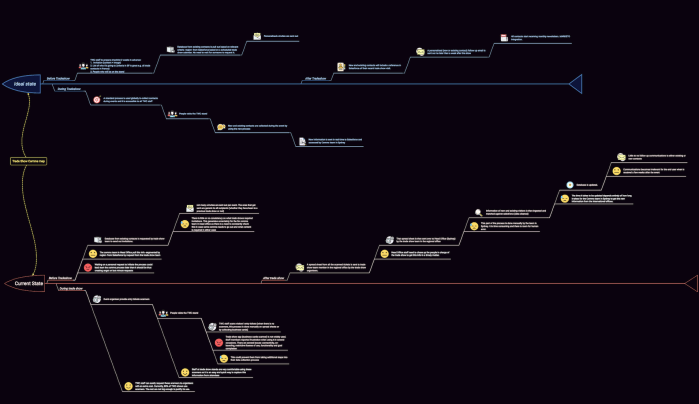
My experience ranges from designing and conducting qualitative research, interviews (contextual enquiries as well as remote usability tests) and card sorting exercises, to quantitative research such as surveys and data analysis to restructure IA, create sitemaps, wireframes, personas and high fidelity prototypes.
These are some other research techniques I have used in recent projects:
- Usability testing for accessibility
- Multimodal testing (use of various assistive technologies)
- UX walkthroughs (a combination of heuristic evaluation, cognitive walkthrough, and accessibility analysis)
- Stakeholder workshops
- Focus group facilitation
- Unmoderated research
- Survey design
Visit my case studies where I put these concepts into practice.
 Sebastian Amado